Votre panier est vide
Il semble que vous n'ayez encore rien ajouté à votre panier


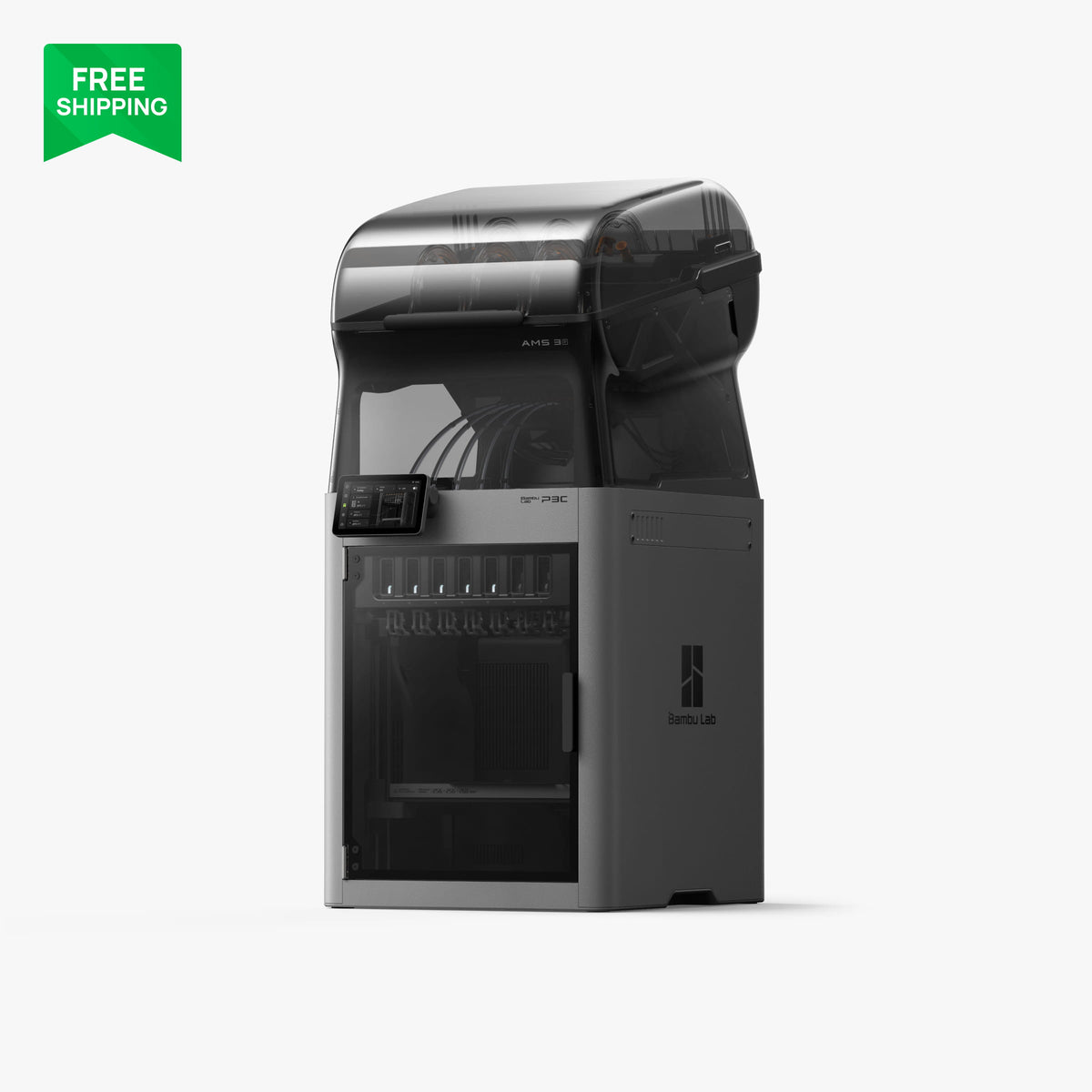


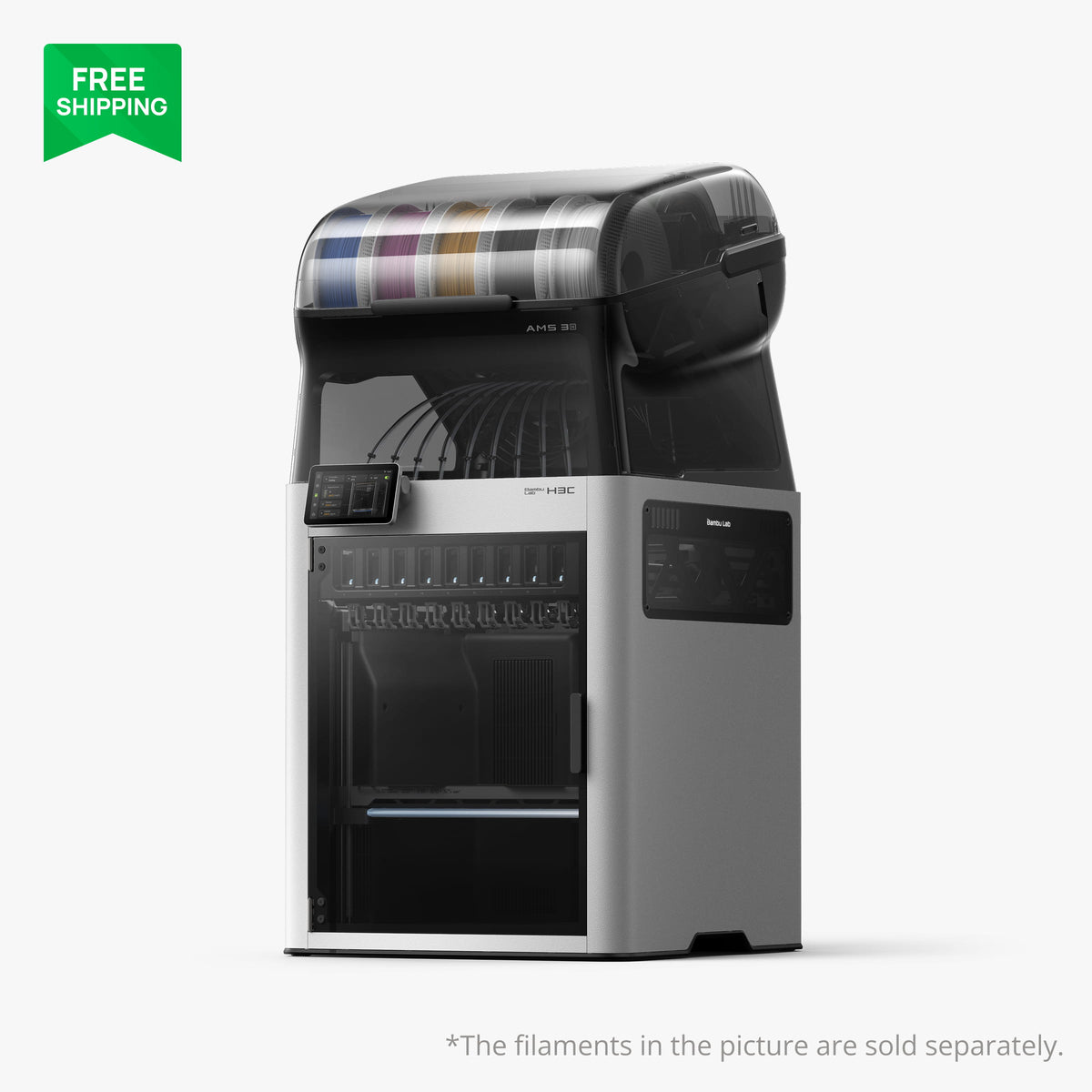


Bambu Lab P3C Combo: What Makes This 7-Tool 3D Printer Different?
Multi-colour and multi-material 3D printing just got more interesting with the introduction of the Bambu Lab P3C Combo.
Designed around Bambu Lab's Swaptek 7-tool changing system, the P3C brings a different approach to printing with multiple filaments. Instead of repeatedly loading and unloading materials through a single nozzle, it uses independent PrintTools, each with its own filament path and nozzle.
The result is a printer designed to combine different colours, materials, and even nozzle sizes in a single project.
But what exactly makes the P3C different from traditional multi-colour 3D printers? Let's explore its key features and what they mean for everyday makers.
1. Swaptek 7-Tool Changing System
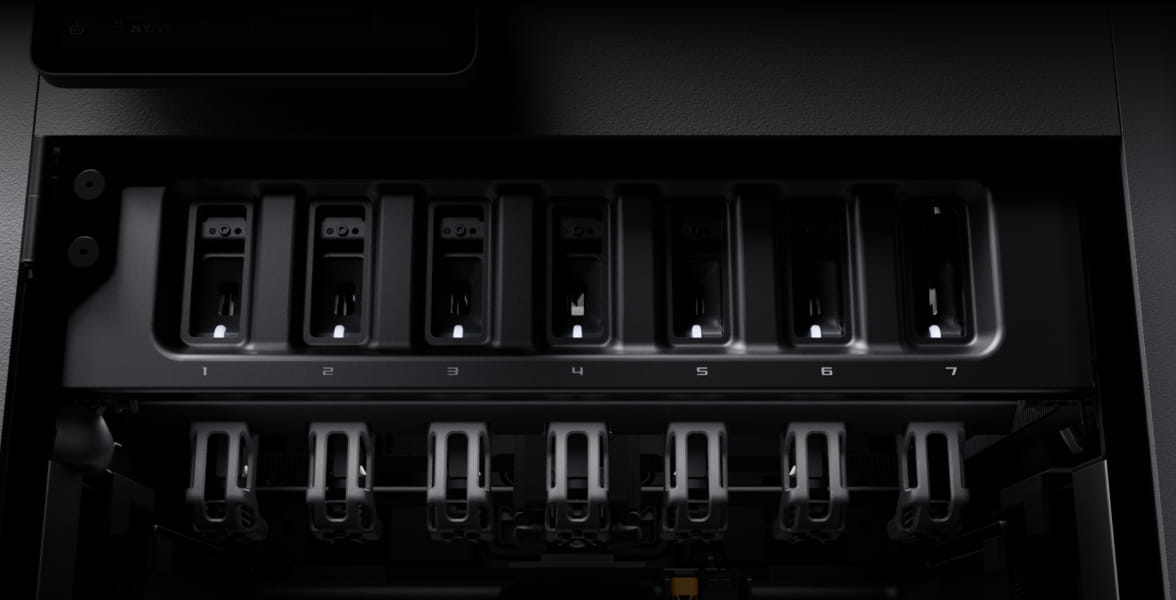
The biggest feature of the Bambu Lab P3C is its Swaptek 7-tool changing system.
Traditional multi-colour printing systems often switch between filaments through one nozzle. This can require unloading one material, loading another, and purging leftover filament to prevent colour contamination.
The P3C takes a different approach.
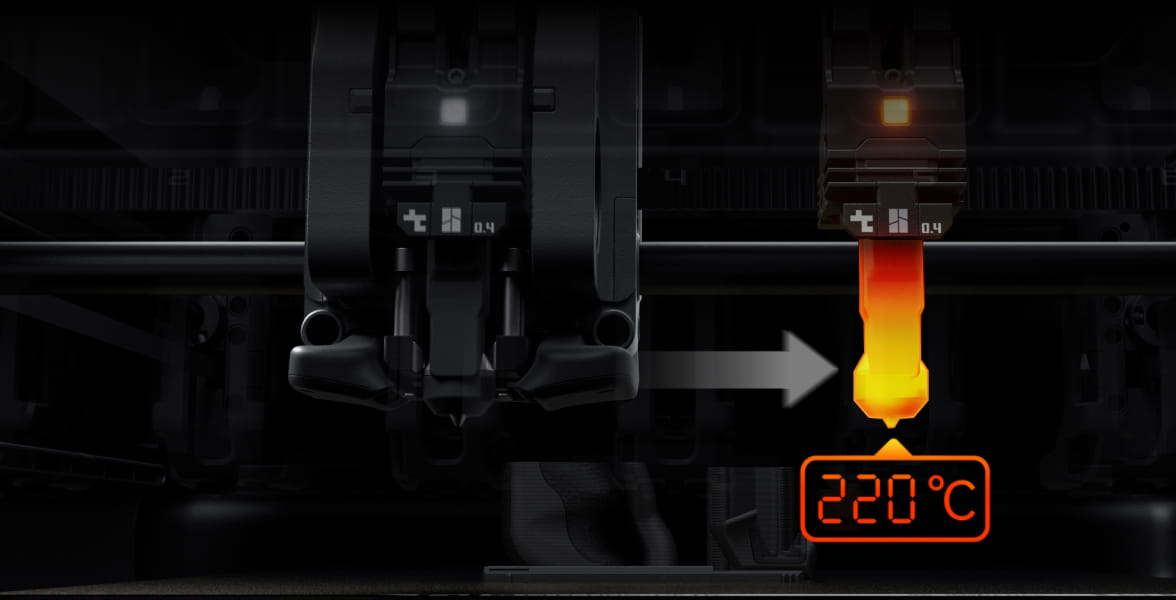
Each PrintTool has its own filament path, heating system, and nozzle. When the printer needs another material, it changes to the corresponding PrintTool instead of repeatedly feeding different filaments through the same nozzle.
Bambu Lab's Active Pre-Heat technology prepares the next PrintTool while the current one is printing. According to Bambu Lab, material changes can take approximately six seconds.
How many PrintTools are included?
The standard P3C Combo includes:
-
Five pre-installed 0.4 mm PrintTools
-
Two additional open slots for optional PrintTools
-
A seven-slot Swaptek system
This means the standard Combo is ready for five-material printing, with room to expand to seven by adding compatible PrintTools.
For makers who regularly work with multiple colours or materials, this independent tool system can make complex projects more convenient.
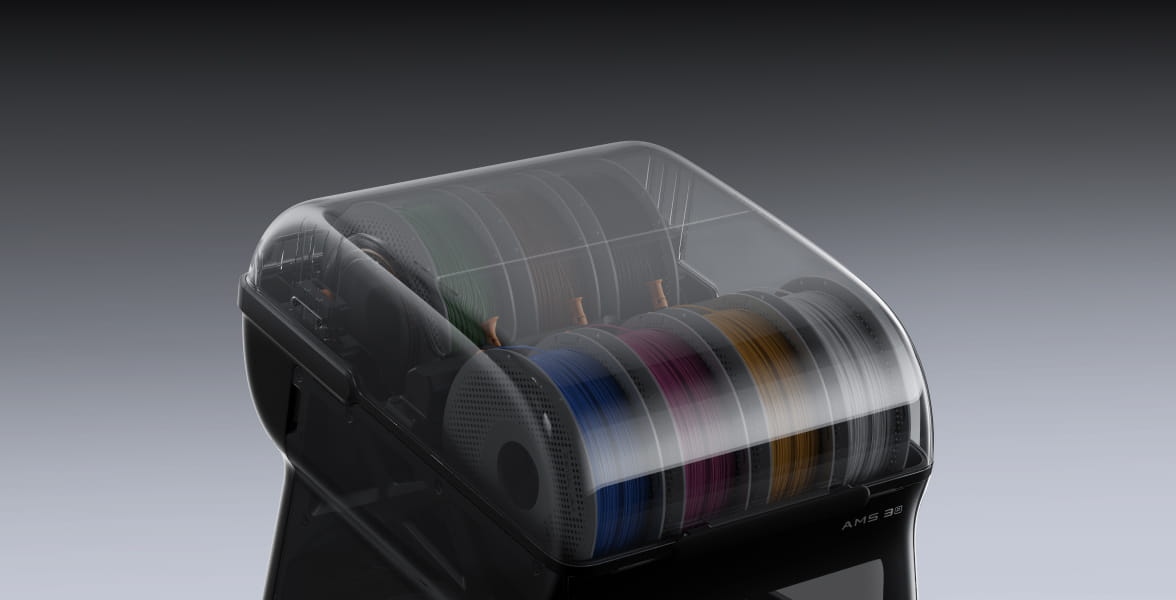
2. AMS 3P: Integrated Seven-Spool Filament Management
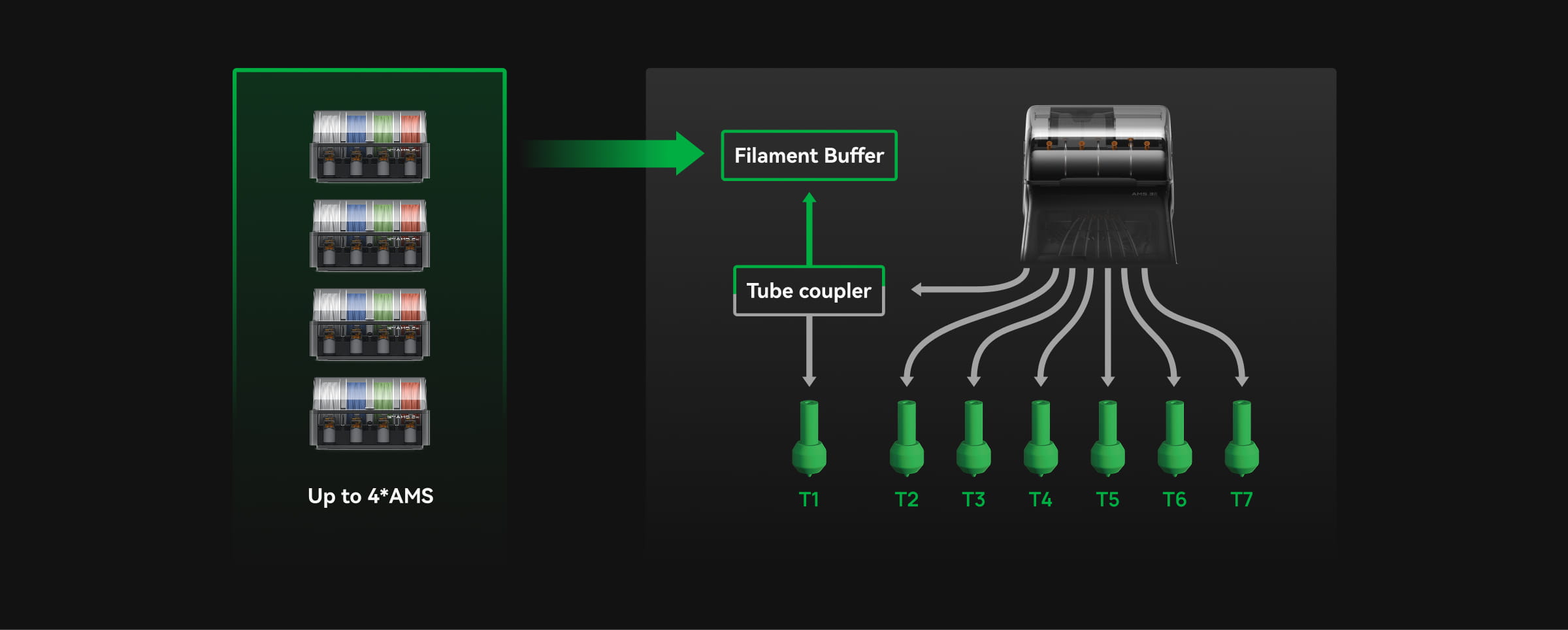
The P3C Combo also includes the AMS 3P, a filament management system designed to keep up to seven spools organized inside the printer setup.
Instead of having multiple external spool holders taking up workspace, the AMS 3P provides enclosed filament storage and dedicated internal filament paths.
Some of its key features include:
-
Storage for up to seven filament spools
-
Sealed filament compartments
-
Dedicated filament paths
-
Integrated design that keeps the setup organized
-
Compatibility with an optional two-slot filament dryer module
The optional dryer module supports drying temperatures up to 75°C, helping users manage moisture-sensitive materials such as TPU and PETG.
The P3C can also be expanded with compatible external AMS units through PrintTool No. 1, supporting up to 22 filament spools in the specified configuration.
It's important to note that the AMS 3P is not identical to the automatic filament-loading workflow found in some other Bambu Lab AMS systems. Check the loading and feeding requirements for your intended setup.
3. FlexFeed: Support for Different Filament Diameters
Another interesting feature is the P3C's FlexFeed extruder.
It supports two filament diameters:
-
1.75 mm filament
-
2.85 mm filament through the bypass feed, with a compatible PrintTool
This gives users more flexibility when working with different materials.
One particularly interesting application is printing softer TPU. Bambu Lab highlights support for TPU as soft as 75A using the dedicated 2.85 mm TPU PrintTool.
This opens up possibilities for projects that combine rigid and flexible materials, such as:
-
Flexible grips and handles
-
Wearable accessories
-
Protective components
-
Soft-touch product features
-
Flexible sections in functional prototypes
The dedicated 2.85 mm PrintTool is an additional accessory, not part of the standard five-PrintTool configuration.
For makers interested in combining different material properties in one project, FlexFeed is one of the P3C's most interesting features.
4. Mixed-Nozzle Printing in One Project
The P3C supports different nozzle diameters, including:
-
0.2 mm
-
0.4 mm
-
0.6 mm
-
0.8 mm
The standard Combo comes with five 0.4 mm PrintTools, but users can configure compatible PrintTools with other nozzle sizes.
Why is this useful?
Different nozzle sizes serve different purposes. A smaller nozzle can produce finer details, while a larger nozzle can help print thicker lines and larger features more efficiently.
With mixed-nozzle printing, users can assign different nozzle sizes to different parts of a project.
For example, imagine printing a model that includes:
-
Fine details using a 0.2 mm nozzle
-
Main structural sections using a 0.4 mm nozzle
-
Larger features using a 0.6 mm nozzle
Instead of choosing one nozzle size for the entire project, the P3C can switch between compatible PrintTools during printing.
This gives makers more flexibility when balancing detail and printing efficiency.
5. Full-Colour Printing with CMYKW
The P3C also supports an interesting approach to full-colour printing using Bambu Lab's PLA Palette CMYKW filament system.
CMYKW refers to five base colours:
-
Cyan
-
Magenta
-
Yellow
-
Key (translucent black)
-
White
These five filaments can be combined through layered colour mixing to create more than 180 colour combinations.
With the P3C's independent PrintTools, users can dedicate a tool to each base colour and explore a wider range of colour combinations in their prints.
This is particularly useful for:
-
Colourful figurines
-
Decorative models
-
Custom signs and logos
-
Display pieces
-
Creative gifts
Instead of being limited to the colours available in individual filament spools, PLA Palette offers another way to approach colour in 3D printing.
For more information, read our article on Bambu Lab PLA Palette: How Five Filaments Create 180+ Colours.
6. Fast Printing Performance

The P3C is designed to combine multi-material capabilities with high-speed printing.
Here are some of its published specifications:
| Specification | Bambu Lab P3C |
|---|---|
| Printing technology | Fused Filament Fabrication |
| Build volume | 256 × 256 × 260 mm |
| Tool-changing system | Swaptek 7-tool |
| Maximum toolhead speed | 1,400 mm/s |
| Maximum acceleration | 25,000 mm/s² |
| Maximum nozzle temperature | 300°C |
| Maximum bed temperature | 110°C |
| Supported nozzle sizes | 0.2, 0.4, 0.6, 0.8 mm |
| Included nozzle | 0.4 mm hardened steel |
Actual printing speeds depend on the material, model geometry, nozzle configuration, and selected print settings.
The P3C also features an enclosed design, an H11 HEPA filter, and activated carbon filtration.
7. Automatic Calibration and AI Print Monitoring
A multi-tool printer needs accurate alignment between its different PrintTools.
The P3C includes automatic calibration designed to help maintain alignment and nozzle offsets when changing tools.
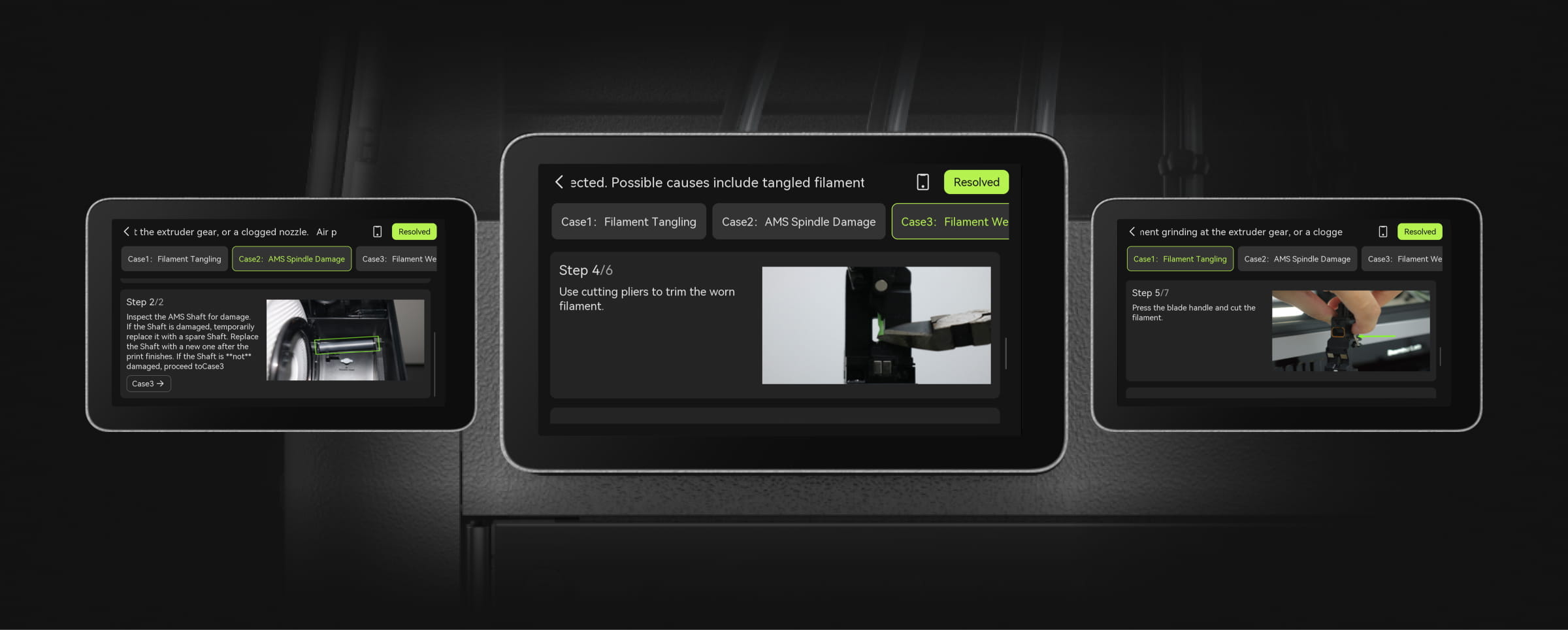
It also features an upgraded Health Management System (HMS) with MiniWiki.
Instead of relying only on error codes, the system provides explanations and troubleshooting guidance directly on the printer's touchscreen.
Its vision system and AI monitoring features are designed to help identify potential printing issues, giving users more information when something needs attention.
These features can make managing a more advanced multi-tool printing setup easier.
8. What Can You Make with the Bambu Lab P3C?
The combination of independent PrintTools, different nozzle sizes, and flexible material options creates plenty of possibilities.
Here are a few examples:
Full-Colour Figurines
Use multiple colours to create detailed figurines and display models with more complex colour combinations.
Flexible and Rigid Components
Combine rigid materials with flexible TPU sections for grips, wearable accessories, and functional prototypes.
Detailed Models
Use smaller nozzles for fine features and larger nozzles for bigger sections of the same project.
Custom Signs and Logos
Create colourful signs, nameplates, and branded display pieces using multiple materials and colours.
Hybrid Functional Parts
Experiment with different material properties in one project to create parts that combine structure, flexibility, and detail.
The P3C gives makers more ways to approach projects that would otherwise require multiple printing steps or separate material changes.
Is the Bambu Lab P3C Combo Worth Considering?
The Bambu Lab P3C Combo offers a different approach to multi-material 3D printing.
Its Swaptek 7-tool changing system is the main attraction, allowing users to work with multiple dedicated PrintTools rather than repeatedly changing filament through a single nozzle.
The included AMS 3P keeps up to seven spools organized within the printer setup, while FlexFeed adds support for different filament diameters and specialized flexible materials.
It also offers mixed-nozzle printing, automatic calibration, and AI-assisted monitoring.
However, it's important to consider the configuration you need. The standard Combo includes five PrintTools, not seven, and additional tools or specialized accessories may be required to take advantage of certain capabilities.
If you're looking for a printer that can handle more complex multi-colour and multi-material projects, the P3C is an exciting addition to the Bambu Lab lineup.
Explore the Bambu Lab P3C Combo at DigitMakers
Ready to explore a new approach to multi-material 3D printing?
The Bambu Lab P3C Combo brings together Swaptek tool-changing technology, AMS 3P filament management, and FlexFeed compatibility in one enclosed desktop 3D printer.
Whether you're creating colourful models, combining rigid and flexible materials, or experimenting with different nozzle sizes, the P3C gives you more ways to bring your ideas to life.
Shop the Bambu Lab P3C at DigitMakers:
https://www.digitmakers.ca/products/bambu-lab-p3c-3d-printer
Explore Bambu Lab 3D printers, filaments, accessories, and more at DigitMakers, your Canadian source for 3D printing supplies and support.
- Le choix d'une sélection entraîne une actualisation complète de la page.