Votre panier est vide
Il semble que vous n'ayez encore rien ajouté à votre panier


BlueCast X-Wax Resin: What Makes It Different?
Creating detailed jewelry patterns for investment casting requires a material that can reproduce fine features, maintain dimensional accuracy, and burn out cleanly. BlueCast X-Wax Resin takes a different approach from conventional castable resins by combining LCD and DLP 3D printing technology with a formulation containing more than 80% real micro-casting wax.
Designed for jewelry designers, jewelers, and casting professionals, X-Wax offers a way to produce casting patterns digitally without requiring a dedicated traditional wax printer.
But what makes this material different, and when should you consider using it?
What Is BlueCast X-Wax Resin?
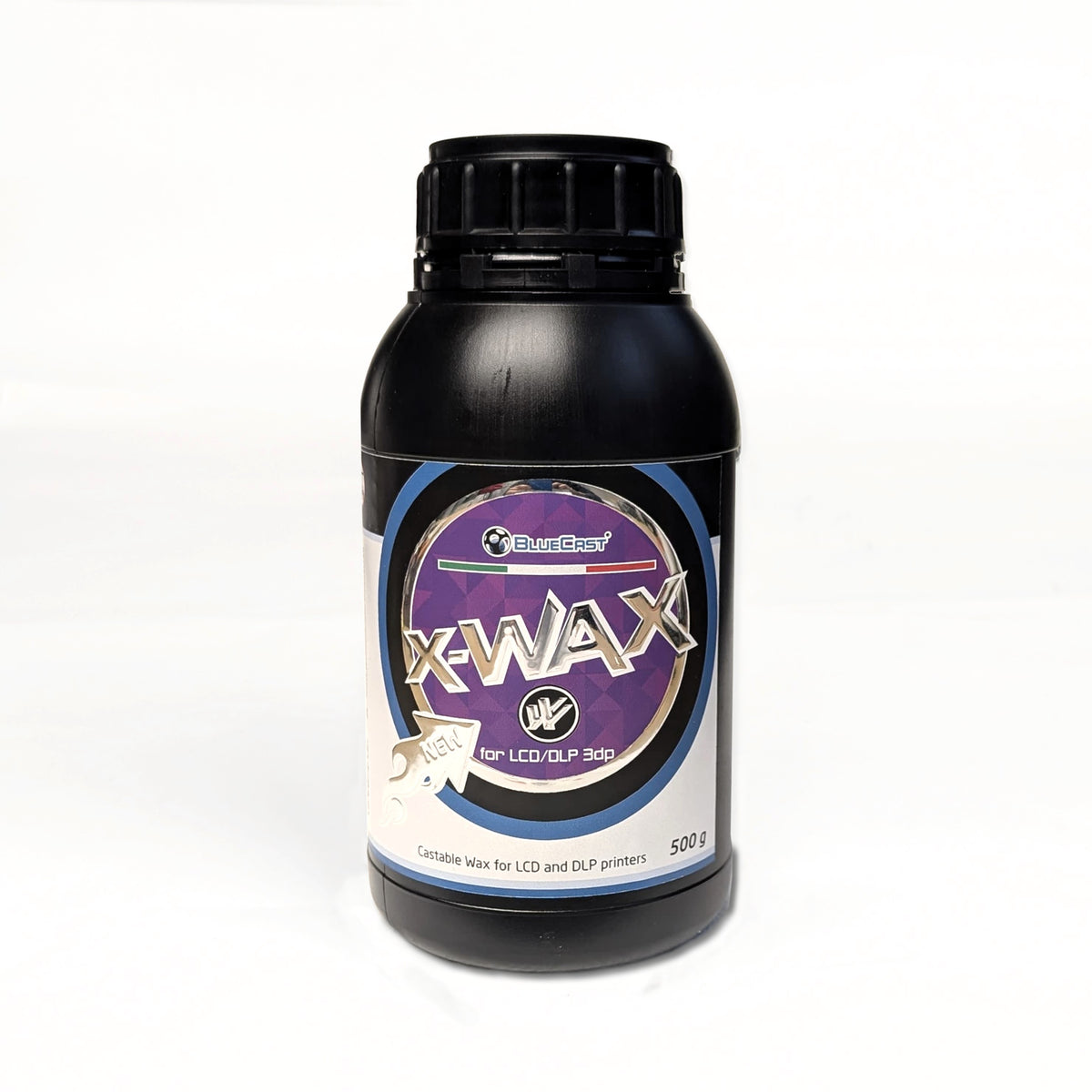
BlueCast X-Wax is a wax-based casting material designed for compatible LCD and DLP 3D printers. Unlike many conventional castable resins that rely primarily on photopolymer formulations, X-Wax contains more than 80% real micro-casting wax.
This high wax content is central to its casting performance and makes it suitable for producing patterns for traditional investment-casting workflows.
BlueCast recommends X-Wax for applications such as:
-
Engagement and celebration rings
-
Men's rings and solid jewelry designs
-
Pavé and micro-pavé settings
-
Eternity bands
-
Earrings and pendants
-
Bracelets and other jewelry pieces
Its combination of printability and castability makes it particularly interesting for jewelry businesses looking to incorporate resin 3D printing into their production process.
1. More Than 80% Real Wax Content

One of the biggest differences between BlueCast X-Wax and conventional castable resins is its wax content.
According to BlueCast, X-Wax contains more than 80% real micro-casting wax. This formulation is designed to provide casting behavior comparable to traditional wax patterns.
Why does that matter?
In investment casting, the printed pattern is surrounded by an investment material. During burnout, the pattern is removed to leave a cavity that can be filled with molten metal.
A material formulated with a high proportion of casting wax can help integrate digital pattern production into established wax-based casting workflows.
For jewelry makers, this means being able to create complex digital designs and produce physical patterns using a compatible LCD or DLP printer.
2. Designed for Clean Burnout
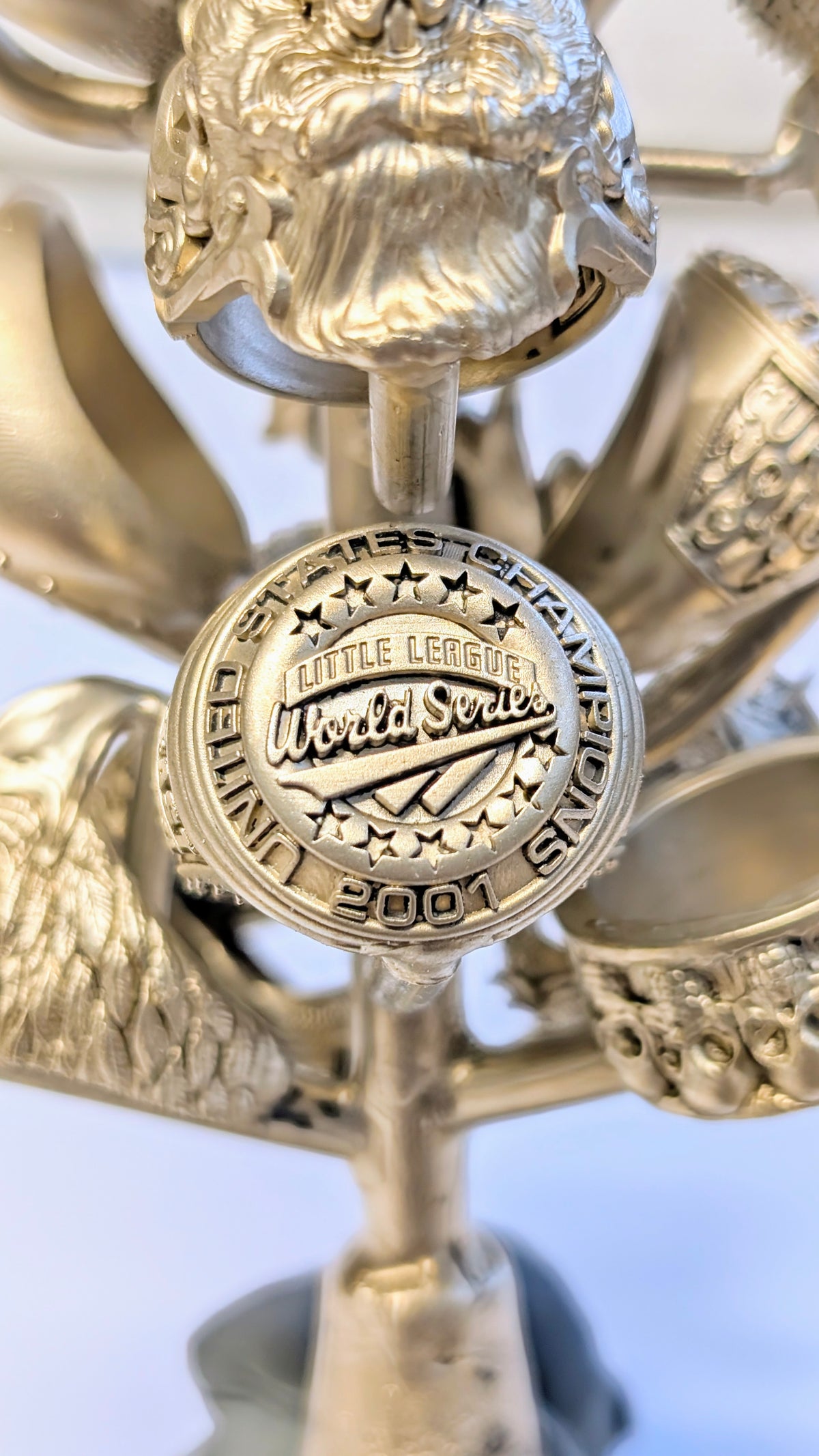
Clean burnout is an important consideration when choosing a casting material.
After a pattern is embedded in investment material, it must be removed during the burnout process. Residue left behind can interfere with the mold cavity and affect the final casting.
BlueCast describes X-Wax as compatible with traditional wax burnout cycles and designed to leave no ash or residue when processed correctly.
This makes it an option for jewelers who want to use digital pattern production while retaining familiar investment-casting methods.
Actual results depend on factors such as the investment material, model geometry, flask size, and burnout procedure. Always follow the manufacturer's instructions and validate the process for your own casting setup.
3. Dimensional Stability for Detailed Jewelry
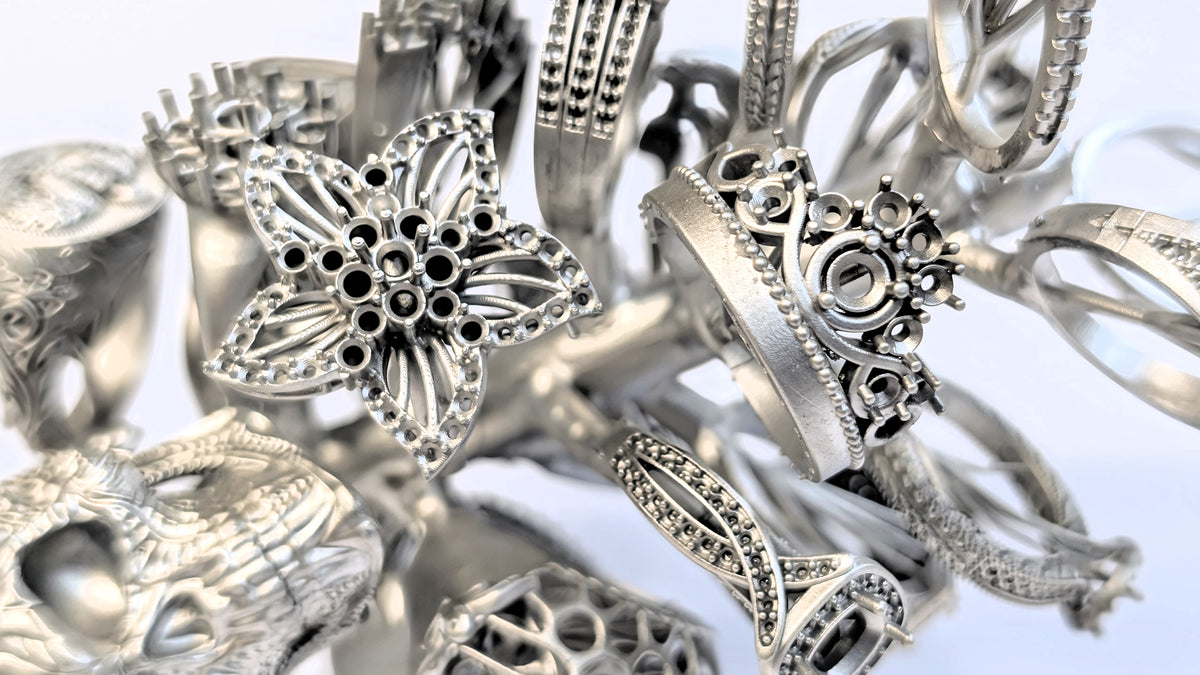
Accuracy is particularly important when producing jewelry patterns. Small design features, stone settings, engravings, and decorative details all need to be reproduced as intended.
BlueCast highlights dimensional stability as one of X-Wax's main features. The material is designed to minimize unwanted dimensional changes and provide precise casting patterns.
This can be valuable when producing:
-
Rings with detailed settings
-
Repeating decorative patterns
-
Fine engravings and surface textures
-
Custom jewelry designs
-
Multiple versions of the same model
For jewelry businesses, consistent pattern dimensions can help make the transition from CAD design to physical casting more predictable.
4. Compatible with LCD and DLP 3D Printers
BlueCast X-Wax is designed for compatible LCD and DLP printers, giving jewelry professionals more flexibility in choosing their printing equipment.
It supports compatible monochrome LCD and DLP systems using 405 nm and 385 nm UV light, according to the manufacturer's product documentation.
This is significant because businesses may be able to incorporate X-Wax into an existing compatible printer setup rather than investing in a dedicated wax-printing machine.
However, compatibility alone does not guarantee successful prints. Printer-specific profiles, exposure settings, resin temperature, and preparation procedures still matter. Check BlueCast's current compatibility information and printing profiles before use.
5. No Routine UV Post-Curing Required
Another feature that distinguishes X-Wax is its simplified post-processing workflow.
BlueCast lists UV post-curing as not required for standard X-Wax use. This can eliminate an additional processing step compared with materials that require post-curing before casting.
There is one important consideration: BlueCast notes that a brief UV cure can be used to increase the rigidity of thinner or lighter models. Because X-Wax is predominantly wax-based, printed patterns can be more delicate than those produced with some other castable resins.
For the best results, follow the manufacturer's recommendations for your specific model rather than automatically applying an additional cure.
6. A Streamlined Print-to-Casting Workflow
BlueCast X-Wax connects digital design with traditional investment casting.
A typical workflow includes the following stages.
Step 1: Prepare the digital model
Create the jewelry design in CAD software and check that the geometry is suitable for printing and casting.
Step 2: Prepare the resin and printer
Follow BlueCast's preparation instructions, select the appropriate printer profile, and ensure the material is within its recommended operating temperature range.
Step 3: Print the pattern
Print the design using a compatible LCD or DLP printer.
Step 4: Wash and dry
Clean the printed pattern thoroughly using the manufacturer's recommended cleaning process. Ensure it is completely dry before proceeding.
Step 5: Prepare for investment casting
Attach the pattern to the sprue system and prepare it for investment according to your established workflow.
Step 6: Burn out the pattern
Follow a validated burnout schedule appropriate for the resin, investment material, and flask setup.
Step 7: Cast the final piece
Once the mold is prepared, proceed with metal casting using the appropriate equipment and procedures.
The advantage of this approach is the ability to create patterns directly from digital models while using established casting processes.
7. What Should You Know Before Printing with X-Wax?
Although X-Wax offers several advantages, its high wax content means it needs some special handling.
Temperature matters
X-Wax can become very viscous or solidify when stored at low temperatures. BlueCast recommends warming the product to approximately 30–40°C before opening and mixing it, while warning against heating it above 60°C.
The manufacturer's instructions should be followed carefully when preparing the resin.
Allow for delicate features
Printed patterns can be more delicate than patterns made with some conventional castable resins. Take care when removing supports, handling the model, and preparing it for casting.
Check printer compatibility
Confirm that your printer is supported and that you are using the correct profile. Do not assume that settings for another BlueCast resin will work with X-Wax.
Validate the burnout process
Even though X-Wax is designed for clean burnout, the casting process must still be matched to the investment material and the geometry being produced.
These considerations can help you get more consistent results and avoid unnecessary trial and error.
BlueCast X-Wax vs Conventional Castable Resin
How does X-Wax compare with a more conventional castable resin?
| Feature | BlueCast X-Wax | Conventional Castable Resin |
|---|---|---|
| Formulation | More than 80% real micro-casting wax | Formulation varies by product |
| Printer compatibility | Compatible LCD and DLP printers | Depends on the resin |
| Burnout workflow | Designed for traditional wax burnout cycles | Depends on the material and manufacturer |
| UV post-curing | Not normally required | May be required |
| Typical applications | Traditional jewelry designs and solid parts | Varies by formulation |
| Material handling | Temperature-sensitive due to high wax content | Varies by formulation |
The most important distinction is not simply that X-Wax is castable. It is that its high real-wax content is designed to bring digital printing closer to a traditional wax-pattern workflow.
The best choice still depends on the printer you own, the designs you produce, and the casting process you use.
Is BlueCast X-Wax Right for Your Jewelry Business?
BlueCast X-Wax is worth considering if your work involves traditional jewelry designs, solid rings, or detailed casting patterns and you want to produce them using compatible LCD or DLP 3D printing equipment.
It may be especially useful for businesses that want to:
-
Produce custom jewelry patterns from CAD files
-
Reduce dependence on manually created wax models
-
Explore digital jewelry manufacturing
-
Use a wax-rich material for investment casting
-
Simplify post-processing by avoiding routine UV post-curing
For extremely delicate, lightweight filigree designs, it is also worth evaluating BlueCast's dedicated X-Wax Filigree formulation, which is designed for that particular application.
Choosing the correct material for the geometry and casting requirements is essential to achieving reliable results.
Shop BlueCast X-Wax Resin at DigitMakers
Looking for a wax-based material for your jewelry 3D printing workflow?
Explore BlueCast X-Wax Resin at DigitMakers and check the manufacturer's compatibility and processing guidance before printing.
Shop BlueCast X-Wax Resin at DigitMakers
Final Thoughts
BlueCast X-Wax stands out because it combines compatible LCD and DLP printing with a formulation containing more than 80% real micro-casting wax.
Its focus on clean burnout, dimensional stability, and a workflow that does not normally require UV post-curing makes it an interesting option for jewelry designers and casting professionals.
For businesses producing rings, pendants, and other traditional jewelry patterns, X-Wax offers another way to connect digital design with investment casting.
The key is to match the material with the right printer, model geometry, preparation process, and validated casting workflow.
- Le choix d'une sélection entraîne une actualisation complète de la page.