Your cart is empty
Looks like you haven't added anything to your cart yet


Bambu Lab Tungsten Carbide Nozzle (H2/P2S): Why It’s Worth the Upgrade
If you’ve been printing engineering materials, composites, or high-volume functional parts on your Bambu Lab printer, you know that your choice of nozzle matters. The right nozzle not only affects surface quality and precision — it determines how well your setup handles abrasive and demanding filaments.
Enter the Bambu Lab Tungsten Carbide Nozzle (for H2 / P2S). Built for strength, durability, and consistency, this nozzle is a step up from hardened steel — and in this guide, we’ll explain exactly why it’s worth the upgrade.
🔍 What Makes a Tungsten Carbide Nozzle Different?
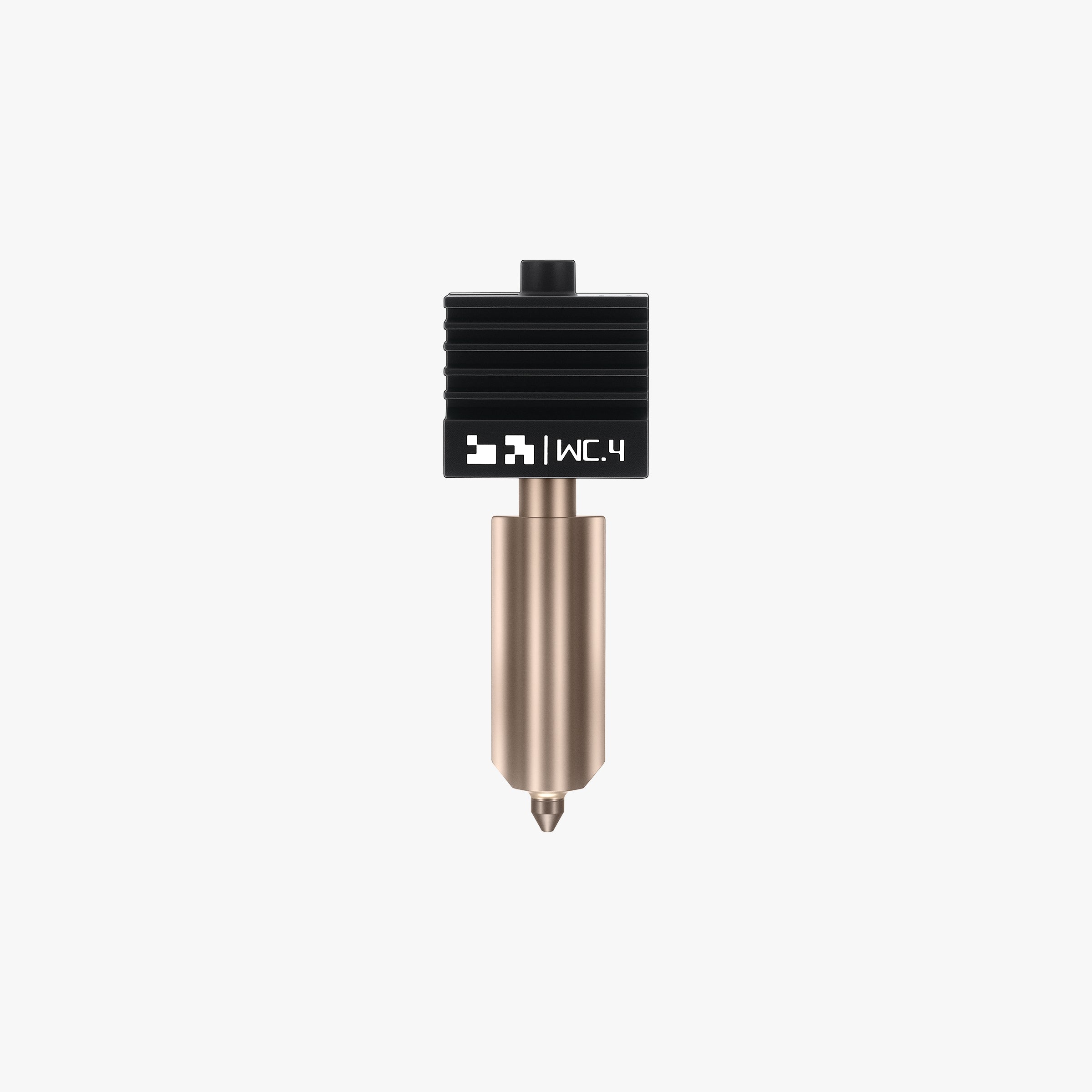
Traditional brass nozzles are easy to print with and excellent for everyday materials like PLA or PETG. But once you start working with abrasive filaments — such as:
-
Carbon-fiber composites (CF)
-
Glass-filled materials
-
Metal-fill filaments
-
Other specialty blends
…you quickly discover that brass and even some hardened steel nozzles wear out quickly. This leads to:
✔ Consistent under-extrusion
✔ Poor dimensional accuracy
✔ Surface artifacts
✔ Frequent replacements
A tungsten carbide nozzle solves these problems because tungsten carbide is much harder and more abrasion-resistant than steel or brass. It simply doesn’t wear down as fast.
🏆 Key Benefits of the Tungsten Carbide Nozzle
1. Long-Lasting Wear Resistance
Tungsten carbide rates significantly higher on the hardness scale than brass or standard hardened steel — which means:
-
You print hundreds of hours without degradation
-
Dimensional accuracy stays consistent
-
Nozzle geometry doesn’t deform over time
This is especially useful if you print lots of carbon fiber, glass fiber, or metal-filled filaments, which chew up lesser nozzle materials.
2. Better Filament Flow Consistency
Abrasion isn’t the only challenge — abrasive fillers tend to roughen the inner bore of brass nozzles, leading to:
-
Clogging
-
Uneven melt pools
-
Backpressure that leads to under-extrusion
A tungsten carbide nozzle maintains a smooth, consistent bore throughout its lifespan, helping your printer push filament cleanly and predictably.
3. Stronger Hotend Performance with Demanding Materials
If you’re printing:
-
Nylon blends (PA, PA6-CF)
-
PETG/CF
-
TPU with fillers
-
Metal composites
…the tungsten carbide nozzle ensures your hotend is not the weak link in the printing chain. Less wear = fewer failed prints = faster prototyping and production.
4. Supports High Volumetric Flow Rates
When paired with the Bambu Lab H2 Series or P2S (especially with high-flow extruders), tungsten carbide nozzles let you push filament faster without sacrificing quality.
This matters when:
✔ Printing large parts
✔ Using high-infill functional prints
✔ Working on prototypes or tight deadlines
You get speed and strength without needing to upgrade your entire hotend or printer.
🔍 Tungsten Carbide vs Hardened Steel — What’s the Real Difference?
| Feature | Hardened Steel Nozzle | Tungsten Carbide Nozzle |
|---|---|---|
| Hardness | High | Very High |
| Abrasion Resistance | Moderate | Excellent |
| Ideal for CF/Glass/Metal Filaments | Yes | Yes — longer life |
| Lifespan | Good | Superior / Longest |
| Cost | Lower | Higher (but better ROI) |
| Flow Consistency Over Time | Degrades | Stable |
In short: hardened steel is great. But tungsten carbide lasts significantly longer under abrasive use, which translates to less downtime and fewer nozzle changes.
🧰 Best Uses for Your Tungsten Carbide Nozzle
Here are printing scenarios where this upgrade makes the most sense:
🎯 Functional Parts
Print strong mechanical parts with minimal wear on your hotend, even after dozens of prints.
🛠 Carbon Fiber & Glass Fiber Filaments
The abrasive nature of fiber fillers is where tungsten carbide shows its biggest advantage.
🚗 Engineering Prototypes
Gears, fixtures, housings, and load-bearing parts printed with reinforced filaments benefit from consistent extrusion.
🦾 High-Volume Printing
If your workflow involves long or repeated prints, this nozzle greatly reduces consumable costs and wear-related failures.
📈 Practical Tips for Using the Tungsten Carbide Nozzle
🔧 Install & Tighten Properly
Always follow manufacturer torque guidelines. A properly tightened tungsten carbide nozzle ensures:
✔ No leakage
✔ Optimal thermal transfer
✔ Better first layers
Note: Avoid overtightening — tungsten carbide can be brittle if mis-handled.
🔄 Pair With a Hardened Heatbreak
While tungsten carbide resists abrasion in the nozzle, using a hardened steel heatbreak keeps filament feed consistent upstream.
🧼 Keep Filaments Dry
Even the best nozzle can’t fix moisture-laden filament. Use:
✔ AMS / AMS HT dry boxes
✔ Filament drying before printing
✔ Dry storage between sessions
This improves layer adhesion and overall strength.
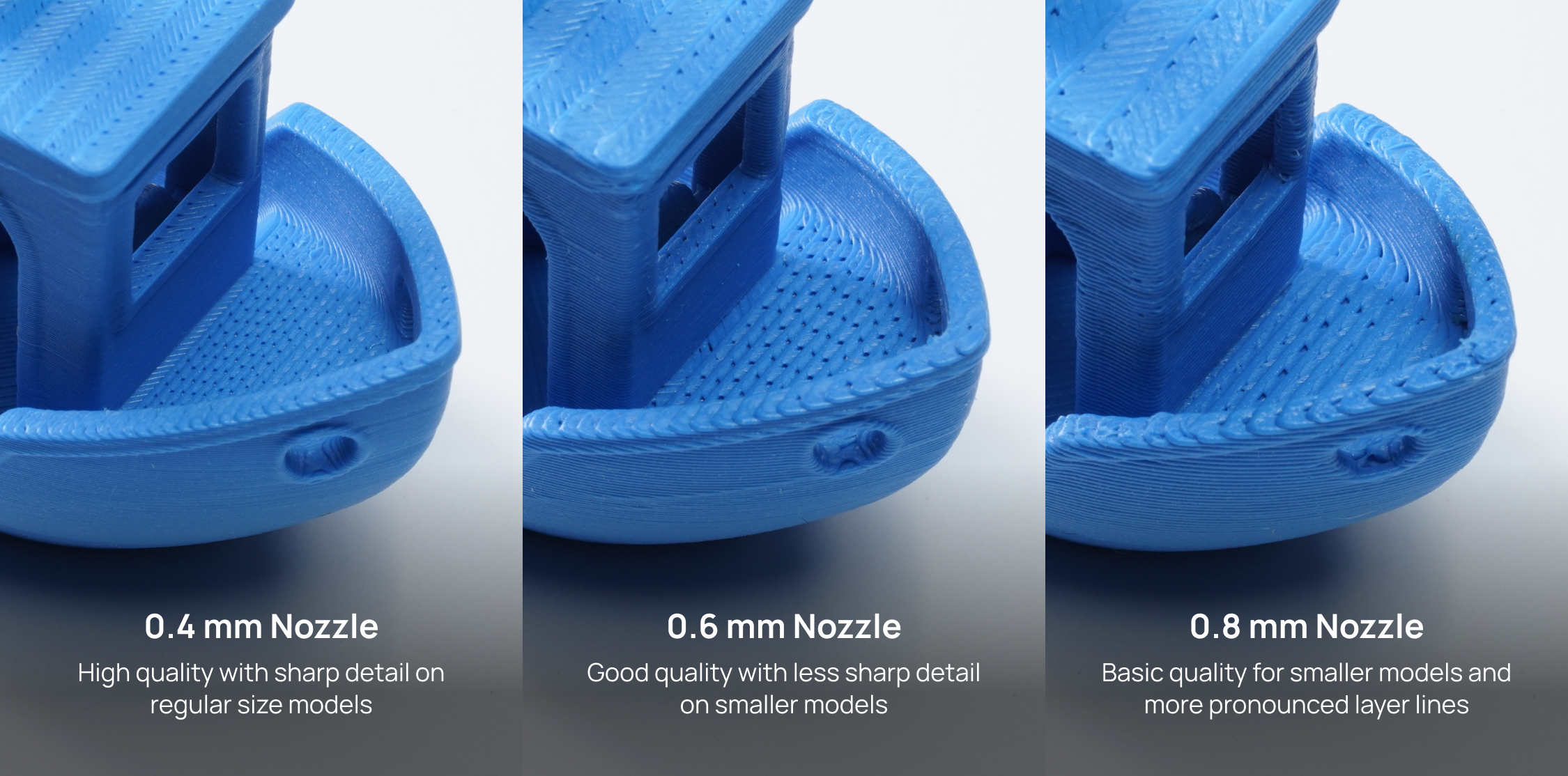
🛠 Consider Nozzle Size Based on Your Goals
-
0.4 mm: Great all-around performance
-
0.6 mm / 0.8 mm: Higher flow and faster large prints
-
Smaller nozzles (0.2–0.3 mm): More detail but slower pace
Tungsten carbide performs across all sizes — just choose based on your print’s requirements.
💡 Is It Worth the Upgrade?
Short answer:
Yes — especially if you print abrasive or engineering filaments regularly.
Here’s why:
✔ Less frequent nozzle replacement
✔ Better long-term dimensional accuracy
✔ Higher flow consistency
✔ Holds up to demanding print jobs
✔ Reduces downtime and filament waste
For makers, professionals, and engineers who print functional parts or composites, the tungsten carbide nozzle turns your H2 or P2S into a more reliable, future-proof machine.
🏁 Final Thoughts
The Bambu Lab Tungsten Carbide Nozzle isn’t just a luxury — it’s one of the best practical upgrades you can make for consistent, abrasion-resistant printing.
Whether you’re tackling:
-
Carbon fiber composites
-
Glass-filled or metal-filled filaments
-
Engineering components
-
High-volume production parts
This nozzle gives you greater reliability and longer service life, making it a smart investment for years of heavy use.
- Choosing a selection results in a full page refresh.
2 comments
Sama
Thanks ChatGPT!
dka
This is 1000% a chatgpt article. garbage.