Your cart is empty
Looks like you haven't added anything to your cart yet


Choosing the Best Build Plate for Different Materials on Bambu Lab 3D Printers
Bambu Lab 3D printers, such as the P1P, P1S, and X1 series, offer impressive versatility with their wide material compatibility and modular build plate options. Choosing the right build plate for the material you're printing can greatly enhance bed adhesion, surface finish, and overall print success. This guide breaks down the best build plate surfaces for common 3D printing filaments.
1. Engineering Plate (Textured PEI)
Best For: PLA, PETG, TPU, and ABS
-
Pros: Excellent first-layer adhesion; textured surface masks layer lines.
-
Notes: Ideal for most standard filaments. For PETG, apply glue stick to prevent excessive adhesion.
2. Cool Plate (Smooth PEI)
Best For: PLA, TPU
-
Pros: Smooth surface results in glossy bottom layers; easy part removal when cool.
-
Notes: Not recommended for high-temperature materials. Low wear resistance over time.
3. High-Temperature Plate (Engineering Plate with High Temp Sticker)
Best For: ABS, ASA, PC, PA (Nylon)
-
Pros: Heat-resistant surface enables strong adhesion for warping-prone materials.
-
Notes: Requires an enclosed print chamber for optimal results with these materials.
4. Textured PEI Plate (Third-Party or OEM)
Best For: PLA, PETG, ABS
-
Pros: Durable and provides a matte finish on the print’s bottom.
- Notes: May need frequent cleaning with IPA. PETG can bond too aggressively—use a separator like glue.
BIQU Panda Build Plate
Best For: PLA, PETG, TPU
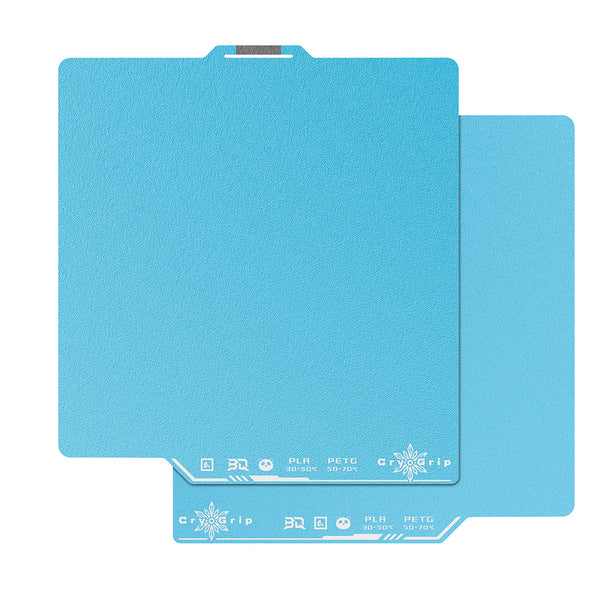
Flexible and magnetic, the BIQU Panda Build Plate features a dual-sided surface, allowing users to choose between a smooth or textured finish. Its excellent adhesion and easy print removal make it ideal for daily, high-speed printing. The plate snaps onto a magnetic base and is compatible with many open-platform printers, including Bambu Lab machines with minor adjustments.
5. Garolite Plate (G10)
Best For: Nylon, Nylon Blends, Carbon-Fiber Filled Filaments
-
Pros: Superb adhesion for Nylons; resists warping.
-
Notes: Not suitable for PLA or TPU. Requires firm bed-leveling calibration.
6. Glass Plate (Aftermarket Option)
Best For: PLA, TPU, PETG (with glue stick)
-
Pros: Flat and reusable; glossy print surface.
-
Notes: Poor thermal conductivity. Long heat-up time.
Tips for Optimizing Build Plate Performance
-
Clean Regularly: Use IPA and a lint-free cloth. Avoid abrasive cleaners that degrade the surface.
-
Use Adhesion Aids: For tricky materials (like PETG or ABS), apply a glue stick, Magigoo, or hairspray.
-
Replace When Worn: Over time, PEI surfaces degrade. Replace or resurface as needed.
Conclusion
The right build plate makes a big difference in print reliability and quality. Whether you're working with everyday PLA or challenging Nylons, Bambu Lab’s variety of build surfaces—or compatible aftermarket options—ensure there’s a solution for every filament type. By matching the plate to your material, you’ll reduce print failures and improve surface finish across the board.
Bonus Tip: Consider having multiple plates prepped with different surface types so you can swap them quickly based on the material you plan to use.
- Choosing a selection results in a full page refresh.