Your cart is empty
Looks like you haven't added anything to your cart yet


PCTG vs ABS: The Better Option for Tough Functional Prints?
When it comes to printing strong, impact-resistant parts, ABS has long been the standard in the 3D printing world. But now, PCTG is gaining attention as a cleaner, more user-friendly alternative for functional prints — offering high durability without the downsides of ABS.
So, which is the better choice for tough, reliable functional parts — PCTG or ABS? Let’s compare them in terms of strength, temperature resistance, durability, ease of printing, and more.

🔍 What Is ABS?
ABS (Acrylonitrile Butadiene Styrene) is a thermoplastic polymer known for:
-
High impact resistance
-
Toughness
-
Moderate heat resistance (~100°C)
-
Good machinability
It’s widely used in automotive components, enclosures, and consumer products. However, printing ABS can be tricky — it tends to warp, releases unpleasant fumes, and typically requires an enclosed printer.
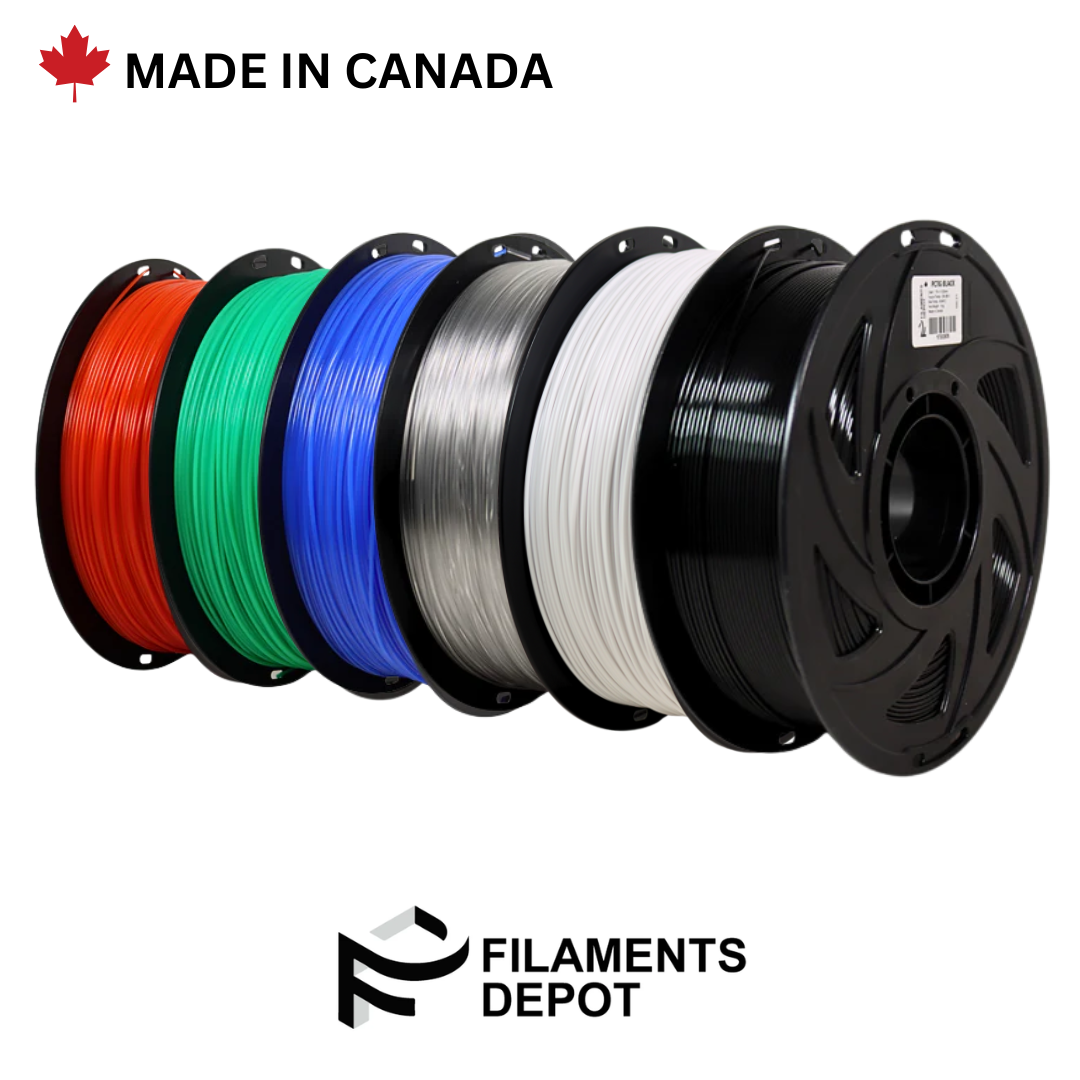
🔍 What Is PCTG?
PCTG (Polycyclohexylenedimethylene Terephthalate Glycol) is a durable copolyester with:
-
Exceptional impact strength
-
Higher optical clarity than ABS
-
Low warping and easy printability
-
Slightly lower heat resistance (~76–80°C)
It’s part of the same family as PETG but is tougher and easier to print in high-performance applications.
⚖️ Comparison: PCTG vs ABS
| Property | PCTG | ABS |
|---|---|---|
| Impact Strength | Very High | High |
| Heat Resistance | ~76–80°C | ~100°C |
| Flexibility | High | Medium |
| Warping | Very low | High |
| Fumes | Minimal | Strong/Unpleasant |
| Ease of Printing | Easy | Requires enclosure |
| Surface Finish | Glossy/Clear | Matte |
| Bed Adhesion | Excellent | Moderate (needs ABS juice/glue) |
| Cracking/Delamination | Rare | Common if cooled too fast |
🛠️ Which One Should You Use?
✅ Choose ABS If:
-
You need higher temperature resistance (e.g., parts near motors, electronics)
-
You have a fully enclosed printer like the Bambu Lab X1C or P1S
-
You plan to post-process (sanding, acetone smoothing)
✅ Choose PCTG If:
-
You want a strong, durable part with less hassle
-
You value low warping and minimal fumes
-
You're printing on an open or semi-enclosed printer
-
You don’t need ultra-high heat tolerance
💡 Note: PCTG is easier to print on Bambu Lab X1C, P1S, or P1P than ABS — especially without needing a 60°C+ enclosed chamber.
🧪 Printing on Bambu Lab Printers
| Setting | PCTG | ABS |
|---|---|---|
| Nozzle Temp | 250–260°C | 245–265°C |
| Bed Temp | 80–90°C | 100–110°C |
| Enclosure Required | No | Yes |
| Cooling Fan | Off or 20% | Off |
| Adhesion Surface | PEI + Glue | PEI + ABS Slurry or Glue Stick |
| AMS Compatible | Yes (if dry) | Not recommended (warping & moisture sensitive) |
🧼 Fume & Safety Considerations
-
ABS emits styrene fumes during printing — strong ventilation or filtering is recommended.
-
PCTG is low-odor and considered safer for indoor environments.
🏁 Final Verdict
| Use Case | Best Material |
|---|---|
| High heat exposure | ABS |
| Everyday functional parts | PCTG |
| Low-maintenance printing | PCTG |
| Post-processing/smoothing | ABS |
| Indoor-safe setup | PCTG |
PCTG is a fantastic alternative to ABS for most non-heat-critical functional parts — especially if you're looking for strength, reliability, and ease of use without the warping or fumes.
- Choosing a selection results in a full page refresh.