Your cart is empty
Looks like you haven't added anything to your cart yet


Which Bambu Build Plate Should You Use for Each Filament?
Choosing the right build plate is one of the most important factors in achieving successful, high-quality 3D prints. Different filaments require different adhesion characteristics, temperatures, and surface types.
If you’re using a Bambu Lab printer, you’ve likely come across options like the Engineering Plate, Cool Plate (SuperTack), and PEI plates—but which one should you use?
This guide breaks it down clearly so you can match the right build plate to each filament type.
🔧 Common Bambu Build Plates
Before diving into materials, here are the most common options:
- Engineering Plate → High-temp, engineering materials
- Cool Plate (SuperTack) → Low-temp, easy adhesion
- Smooth PEI Plate → Balanced adhesion + smooth finish
- Textured PEI Plate → Strong grip + textured bottom surface
🧪 Build Plate Selection by Filament
PLA (Standard & Silk)
Best Plates:


Why:
PLA prints at lower temperatures and benefits from strong initial adhesion without excessive heat.
Tips:
- Use Cool Plate for easy prints (no glue needed)
- Use Smooth PEI for better finish quality
PETG
Best Plates:

Why:
PETG sticks very well—sometimes too well—so PEI provides controlled adhesion.
Avoid:
- Cool Plate (can over-stick or damage surface)
Tips:
- Use glue stick as a release layer if needed
- Let prints cool before removal
ABS / ASA
Best Plate:
Why:
ABS and ASA require:
- High temperatures
- Strong adhesion
- Warp resistance
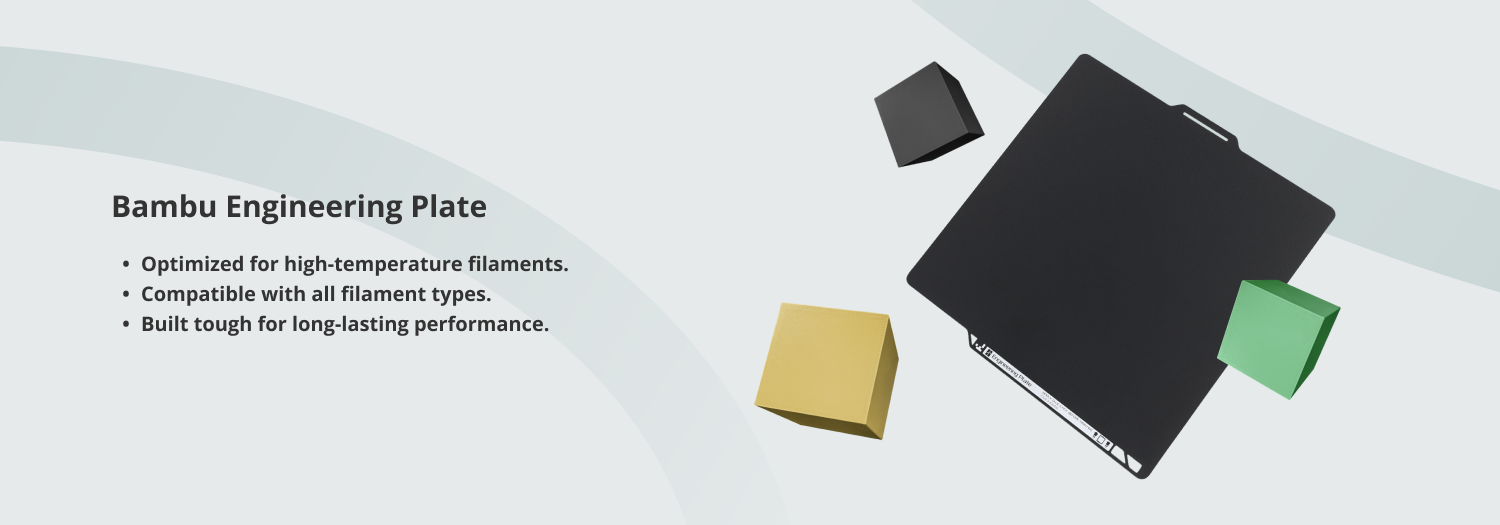
The Engineering Plate is designed specifically for these conditions.
Tips:
- Use enclosure
- Apply glue stick for best results
Nylon (PA)
Best Plate:
- Engineering Plate ⭐
Why:
Nylon requires:
- High heat
- Excellent adhesion
- Stable surface
Tips:
- Always dry filament
- Use glue or adhesive layer
TPU (Flexible Filament)
Best Plates:
- Smooth PEI Plate ⭐
- Cool Plate (in some cases)
Why:
TPU benefits from moderate adhesion without sticking too aggressively.
Tips:
- Print slower
- Avoid overly sticky surfaces
Carbon Fiber / Glass Fiber Filaments
Best Plate:
Why:
These materials are:
- Abrasive
- High-temp
- Functional-focused
Engineering Plate handles heat and stress better than PEI or Cool Plate.
📊 Quick Summary Table
| Filament | Best Build Plate |
|---|---|
| PLA / Silk PLA | Cool Plate / Smooth PEI |
| PETG | Smooth PEI / Textured PEI |
| ABS / ASA | Engineering Plate |
| Nylon (PA) | Engineering Plate |
| TPU | Smooth PEI |
| CF / GF Composites | Engineering Plate |
🏆 Pro Tip: You’ll Likely Need More Than One Plate
No single build plate works perfectly for every material.
Most Bambu users keep at least:
- Cool Plate → everyday PLA printing
- Engineering Plate → advanced materials
- PEI Plate → versatile middle ground
This setup gives you maximum flexibility.
🔚 Final Thoughts
Choosing the right build plate isn’t just about adhesion—it affects:
✔ Print success rate
✔ Surface finish
✔ Ease of removal
✔ Material compatibility
If you match your filament with the correct plate, you’ll see better first layers, fewer failures, and cleaner prints.
- Choosing a selection results in a full page refresh.
1 comment
Don Carlson
You should put up a printable PDF with a chart for makers to post on the wall.