Your cart is empty
Looks like you haven't added anything to your cart yet


Formlabs Castable Wax Resin: What Makes It Different?
When producing highly detailed patterns for investment casting, the resin you choose can make a significant difference in the printing and casting workflow. Formlabs Castable Wax Resin is specifically formulated for this type of application, combining SLA 3D printing with a wax-filled material designed for clean burnout.
Unlike general-purpose resins, Castable Wax Resin contains 20% wax, helping it capture intricate features while providing the strength needed to handle delicate printed patterns. Formlabs describes it as a material for direct investment casting, particularly for lightweight and highly detailed jewelry designs.
So, what makes Castable Wax Resin different, and when should you consider using it?
What Is Formlabs Castable Wax Resin?
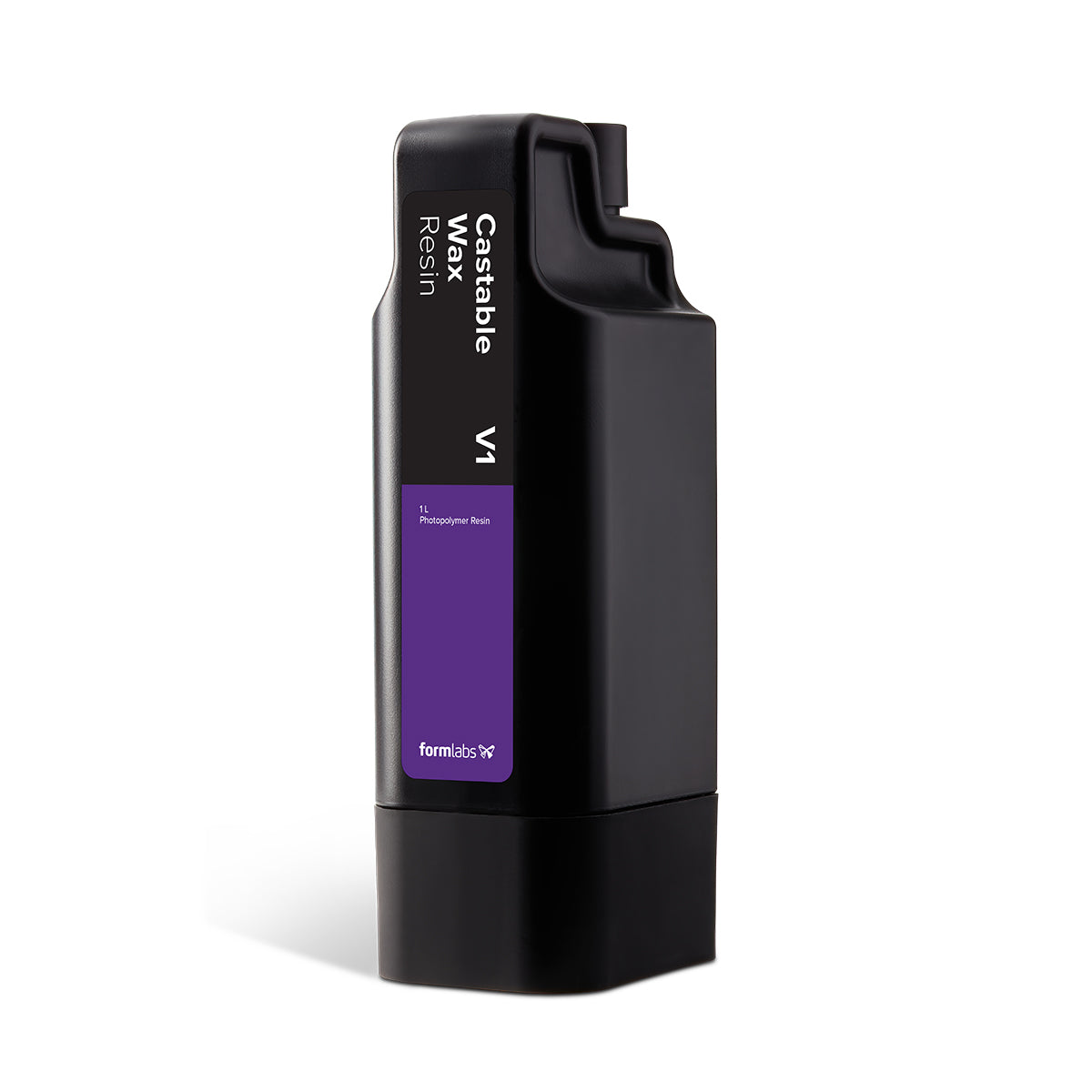
Formlabs Castable Wax Resin is an SLA resin containing 20% wax. It is designed specifically for producing patterns that can be used in investment casting.
The material is formulated to provide:
-
Fine detail reproduction
-
Smooth surfaces
-
High green strength
-
Shape retention for delicate patterns
-
Clean burnout
-
No post-curing requirement
It is particularly suited to intricate jewelry patterns, including designs with thin walls, filigree, pavé geometries, and other fine details.
For the Form 4 generation, Castable Wax Resin is available in a 1 L cartridge, making it suitable for jewelry studios, designers, casting operations, and other professional workflows that need a dedicated casting material.
What Does "20% Wax-Filled" Mean?
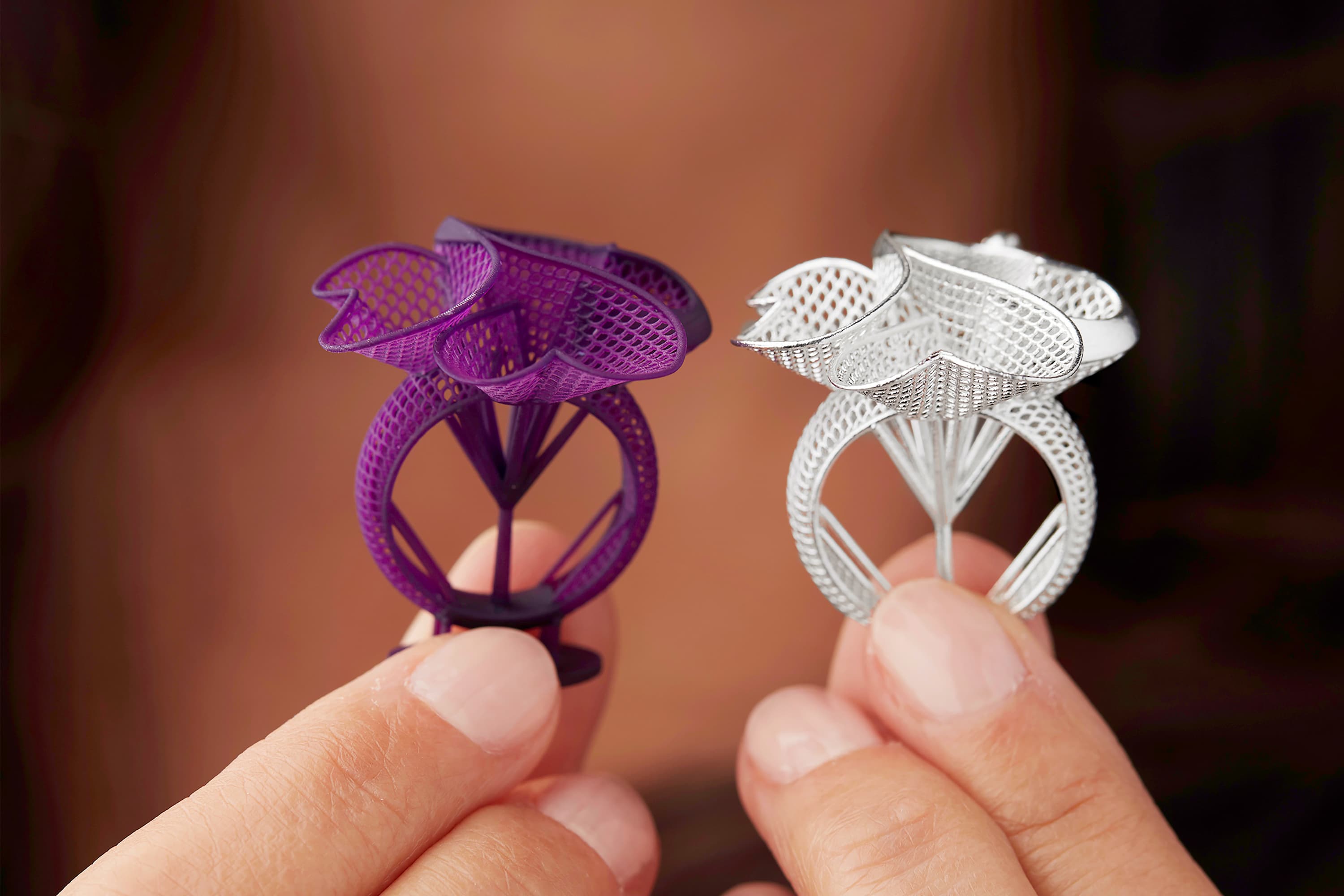
One of the key differences is right in the name.
Castable Wax Resin contains 20% wax within its formulation. The material is still an SLA photopolymer, but the wax content helps it behave more like a traditional wax pattern during the burnout process.
This is important because the printed pattern eventually needs to be removed from the investment mold before metal is cast.
Formlabs states that Castable Wax Resin has zero ash content and is designed for clean burnout.
This makes the material particularly useful for direct investment casting workflows.
Why Is Castable Wax Resin Useful for Jewelry?
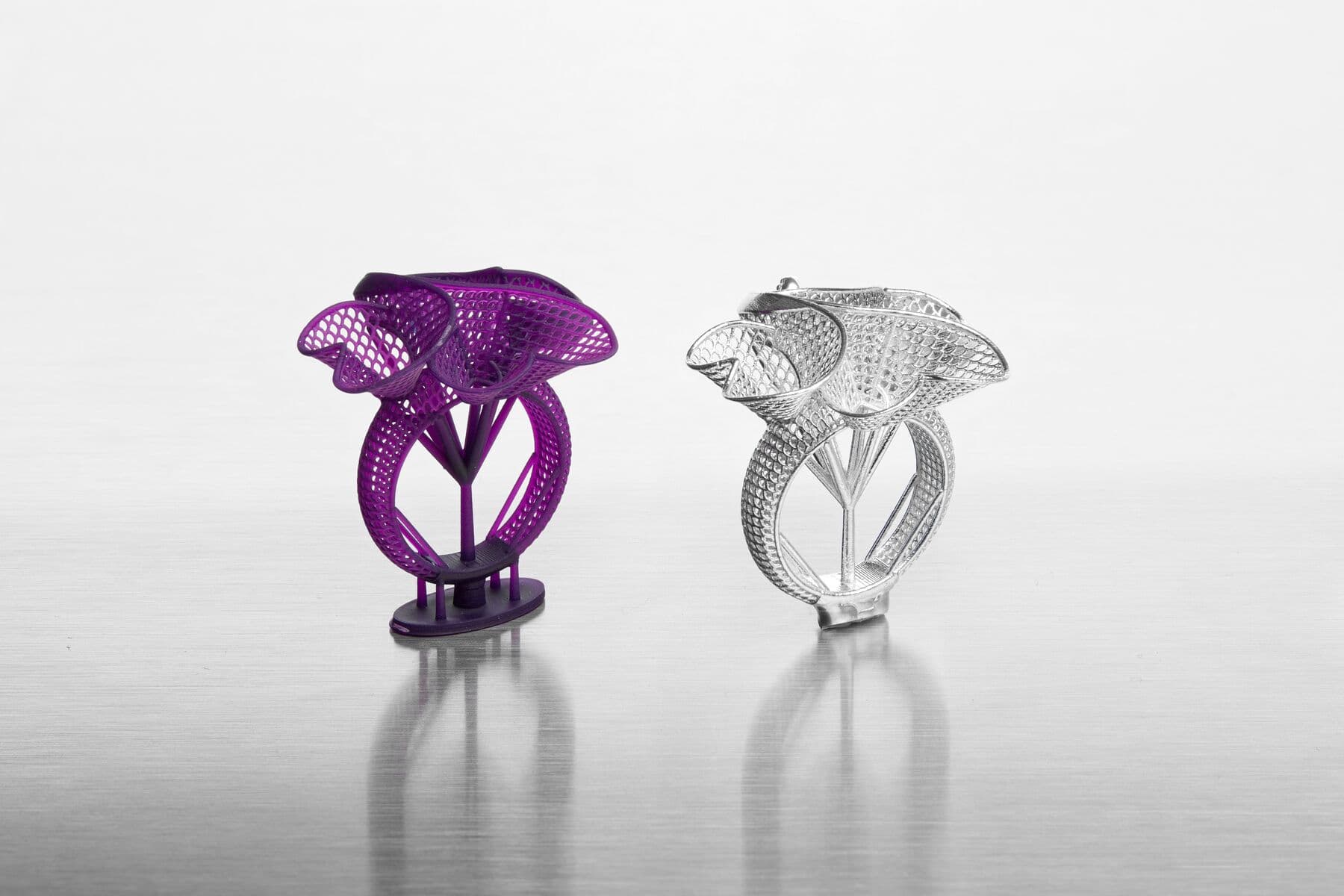
Jewelry designs often contain extremely small features that can be difficult to reproduce using conventional manufacturing methods.
Castable Wax Resin is designed to capture these details while maintaining enough green strength for handling.
Formlabs specifically recommends it for:
-
Fine filigree
-
Pavé geometries
-
Thin walls
-
Fine surface details
-
Lightweight jewelry
-
Intricate patterns
-
Custom jewelry prototypes and try-ons
The material's high green strength helps thin patterns maintain their shape before casting.
This makes it possible to move from a digital jewelry design to a physical casting pattern without first creating a traditional wax model.
High Green Strength for Delicate Patterns
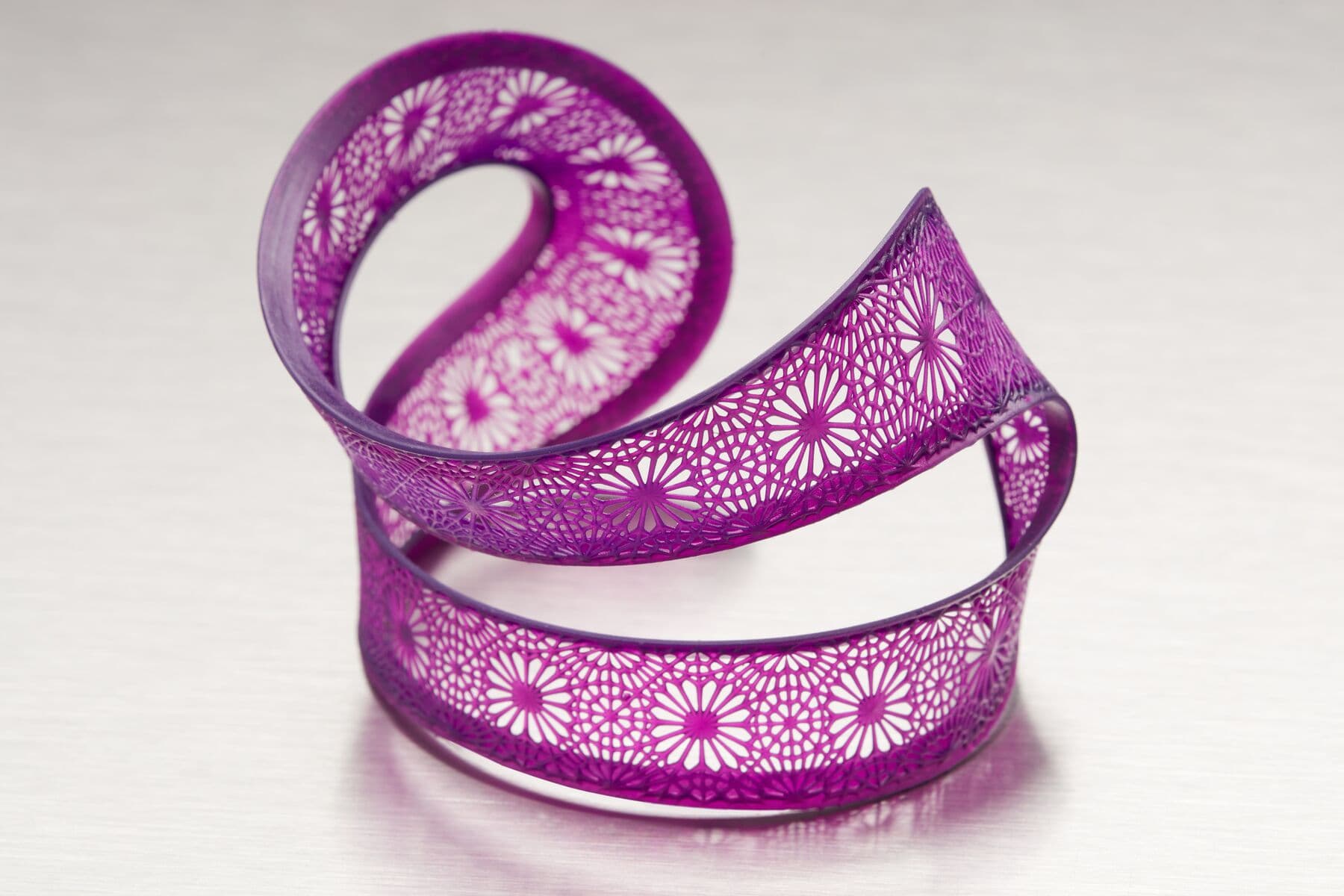
A casting pattern needs to survive several stages before it reaches the casting process.
It must be printed, washed, dried, removed from the build platform, and prepared for investment. Delicate features can be vulnerable during these steps.
Castable Wax Resin is formulated with high strength and stiffness in its green state. Formlabs notes that this makes it particularly suitable for thin patterns and structures such as wire filigree.
This is one of the important differences between Castable Wax Resin and materials that require additional post-processing before they are ready for casting.
No Post-Curing Required
Another major advantage is the simplified workflow.
Castable Wax Resin does not require post-curing before casting. After washing and thoroughly drying the printed pattern, it can proceed to the next stages of the casting workflow.
This is different from some other castable materials that require a post-cure.
Formlabs also notes that post-curing Castable Wax patterns can result in a small amount of shrinkage, potentially affecting dimensional accuracy. For this reason, Formlabs does not recommend post-curing when the highest accuracy is required.
Eliminating this step can make the overall workflow simpler and reduce processing time.
Fine Detail at 25 Microns
Castable Wax Resin supports 25-micron and 50-micron layer thicknesses on supported Formlabs printers.
The 25-micron option can be particularly useful when the design contains very fine details and surface features.
For jewelry designers, this can help reproduce details such as:
-
Engravings
-
Fine textures
-
Small grooves
-
Filigree
-
Thin edges
-
Intricate surface patterns
The appropriate layer thickness will depend on the design and the desired balance between detail and printing time.
Smooth Surfaces and Easy Support Removal
Surface quality is especially important for jewelry patterns because imperfections on the printed pattern can ultimately affect the cast part.
Formlabs describes Castable Wax Resin as providing smooth, refined surfaces. Its support structures can also be removed with light-touch support tips designed to minimize visible marks.
Careful orientation and support placement are still important. The goal is to protect delicate features while minimizing the amount of finishing required after printing.
How Does the Casting Workflow Work?
A typical workflow starts with a digital design and ends with a finished cast part.
1. Design the Model
Create the jewelry or casting pattern in CAD software, keeping casting requirements in mind.
2. Prepare the Print
Import the model into PreForm, choose Castable Wax Resin and the appropriate layer thickness, orient the model, and generate supports.
3. 3D Print the Pattern
Print the design using a compatible Formlabs SLA printer.
4. Wash and Dry
After printing, the pattern needs to be washed to remove uncured resin.
Formlabs recommends washing Castable Wax parts for the shortest time necessary to remove liquid resin and ensuring the parts are completely dry before casting. Internal channels and hollow areas should be thoroughly dried as well.
5. Prepare for Investment
The printed pattern can then be attached to a sprue system and prepared for investment casting.
6. Burnout
The investment mold is heated according to the appropriate burnout process. The printed pattern is removed, leaving a cavity for the final casting.
Formlabs recommends using its specified investment materials and starting with the appropriate validated burnout schedule for the application. The exact process should be adjusted according to the investment material, flask size, geometry, and casting setup.
7. Cast the Final Part
Once the pattern has been burned out and the investment mold is prepared, the final metal can be cast into the cavity.
Castable Wax Resin vs Standard Castable Resin
So why not simply use a standard castable resin?
The two materials are designed for casting, but they have different characteristics.
| Feature | Castable Wax Resin | Castable Resin |
|---|---|---|
| Wax content | 20% | No |
| Post-cure required | No | Yes, for casting |
| Fine detail | Excellent | Excellent |
| Green strength | High | Lower before post-cure |
| Burnout | Clean burnout | Clean burnout |
| Ideal applications | Intricate jewelry and delicate patterns | Jewelry casting and other casting applications |
| Minimum layer thickness | 25 µm | Depends on printer/material |
Formlabs specifically recommends Castable Wax Resin for smaller parts and delicate features such as wire filigree, while other castable materials are better suited to different part sizes and applications.
What Applications Is Castable Wax Resin Best For?
Castable Wax Resin is particularly well suited to applications where fine detail and clean burnout are important.
Jewelry
Jewelry is one of the primary applications. Designers can produce intricate patterns for rings, pendants, earrings, and other pieces directly from digital designs.
Filigree
Thin, intricate filigree structures can benefit from the material's high green strength and fine-detail capabilities.
Custom Jewelry
Digital designs can be quickly turned into physical patterns, making the material useful for custom jewelry workflows and prototypes.
Dental Patterns
Formlabs also supports Castable Wax Resin for dental casting and pressing applications. Its dental applications include patterns for crowns, bridges, copings, substructures, and removable partial denture frameworks.
When Should You Choose Castable Wax Resin?
Castable Wax Resin is a good fit when your workflow requires:
-
Highly detailed casting patterns
-
Delicate or thin structures
-
Fine jewelry designs
-
Direct investment casting
-
Clean burnout
-
Minimal post-processing
-
A streamlined print-to-casting workflow
It is not intended as a general-purpose resin for final functional parts. Formlabs specifically recommends it for casting patterns and jewelry prototyping rather than final functional components.
Why Choose Castable Wax Resin for Form 4?
The combination of Form 4's SLA printing capabilities and Castable Wax Resin gives jewelry and casting professionals a digital workflow for producing highly detailed patterns.
Instead of manually creating every wax pattern, designers can start with a digital CAD model, print the pattern, prepare it for investment, and proceed to casting.
The key advantages of Castable Wax Resin are its 20% wax formulation, high green strength, fine-detail capability, smooth surfaces, clean burnout, and no-post-cure workflow.
For studios producing intricate jewelry and other small casting patterns, these features can make the material a practical addition to a Formlabs production workflow.
Shop Formlabs Castable Wax Resin at DigitMakers
Looking for Castable Wax Resin for your Form 4 workflow?
Shop Formlabs Castable Wax Resin 1 L at DigitMakers
Final Thoughts
Formlabs Castable Wax Resin is designed specifically for applications where fine detail, delicate structures, and clean burnout matter.
Its 20% wax-filled formulation, high green strength, smooth surface finish, and ability to be used without post-curing make it different from many general-purpose and castable resins.
For jewelry designers, casting professionals, and other users creating intricate investment-casting patterns, Castable Wax Resin provides a streamlined path from digital design to 3D printed pattern to final casting.
- Choosing a selection results in a full page refresh.